
Trump threatens new tariffs on European allies over Greenland until deal reached, as thousands protest
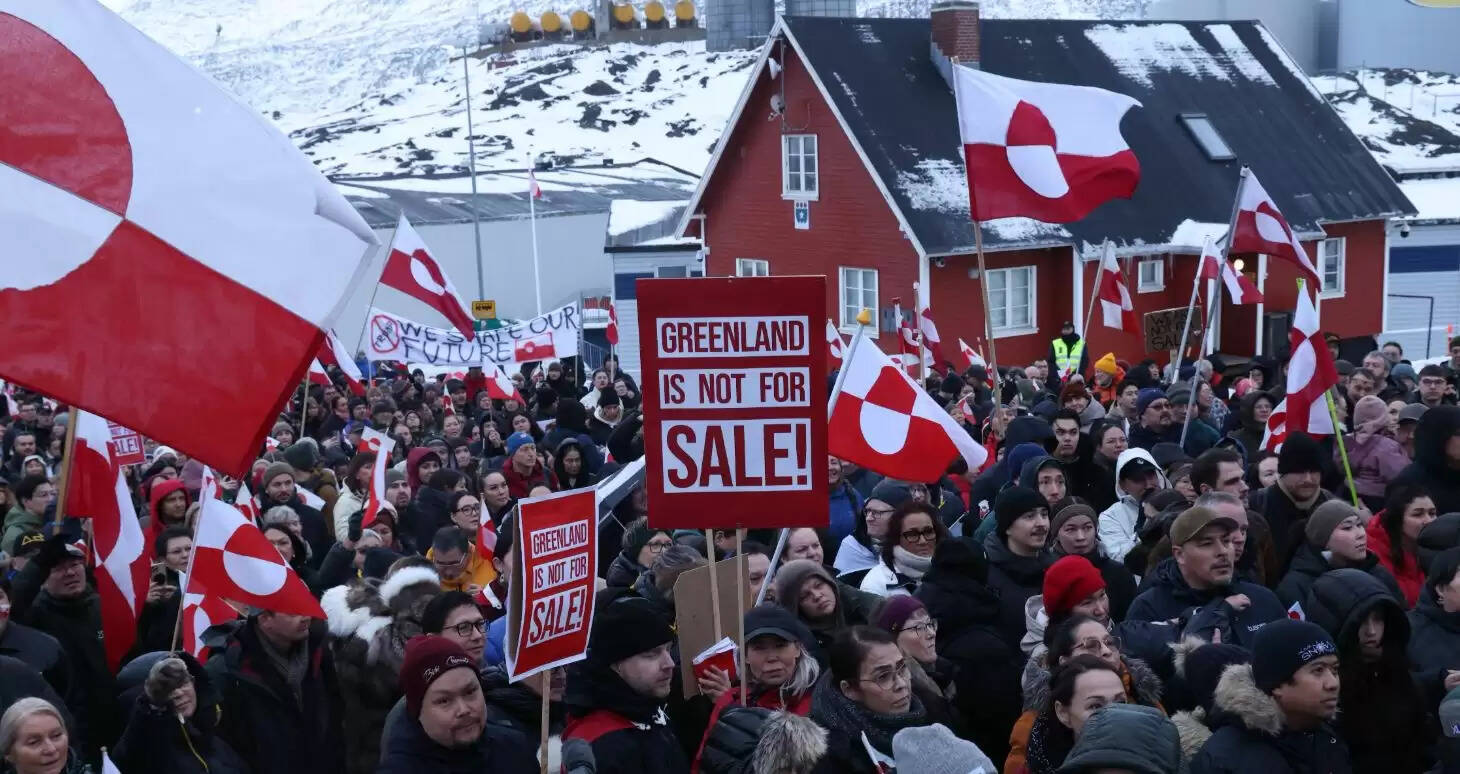
President Donald Trump said Saturday the United States will impose new tariffs on several European countries unless a deal is reached for the purchase of Greenland, escalating his long-running push for US control of the Arctic territory ruled by Denmark.
Trump said he will impose a 10% tariff on “any and all goods” from Denmark, Norway, Sweden, France, Germany, the United Kingdom, the Netherlands and Finland starting February 1, increasing to 25% on June 1, until an agreement is reached.
“We have subsidized Denmark, and all of the Countries of the European Union, and others, for many years by not charging them Tariffs, or any other forms of remuneration,” Trump wrote in a Truth Social post. “Now, after Centuries, it is time for Denmark to give back — World Peace is at stake!”
Trump didn’t specify the nature of the tariffs he plans to impose on the European countries, nor whether the 10% tariff is on top of what they’re already paying. CNN has reached out to the White House for comment.
The president’s tariff threat was met with concern from European leaders, including Danish Foreign Minister Lars Løkke Rasmussen, who said it “comes as a surprise” after a “constructive meeting” with Vice President JD Vance and Secretary of State Marco Rubio earlier this week.
European Union lawmakers, meanwhile, called for a suspension of the trade agreement the EU reached with the United States last year.
Trump also warned in his social media post that European nations’ deployment of military personnel to Greenland amounted to “a very dangerous situation for the Safety, Security, and Survival of our Planet.”
While it is not necessarily unusual for NATO countries to send military assets for exercises in Greenland, the timing represents a significant show of support for Denmark and underscores the tensions within the transatlantic alliance.
“We agree with the US that we need to do more since the Arctic is no longer a low tension area,” Rasmussen said in a statement. “That’s exactly why we and NATO partners are stepping up in full transparency with our American allies.”
Trump added in his post that the US has sought to acquire Greenland for more than 150 years and argued that modern weapons systems and missile defense projects, including the “Golden Dome,” make control of the territory especially important.
His repeated statements have strained diplomatic relations between the US and Denmark,
whose realm includes Greenland, an autonomous territory with broad self-government and the right to self-determination, while also prompting condemnation from NATO’s European member states.
How Trump could impose tariffs
The tariffs Trump threatened would likely be imposed under the International Emergency Economic Powers Act — the law the president has cited in previous executive orders that outlined levies used to bend countries to his will.
The Supreme Court is expected to rule in the coming weeks on whether Trump can use the emergency powers granted in the International Emergency Economic Powers Act to impose tariffs.
Justices have appeared skeptical of the Trump administration’s use of that law, because it makes no mention of tariffs.
If Trump is unable to use emergency powers to impose tariffs, he has other laws he could use, but those tend to be limited in their scope and length of time they can be employed.
That may limit tariffs’ usefulness as a device to pressure other countries into giving Trump what he wants — such as Greenland.
The countries Trump threatened are already subject to tariffs of at least 10%. It’s unclear whether preexisting deals with the United Kingdom and European Union would supersede the new tariffs.
Those deals, reached last year, carve out a number of exceptions to the rates for imports to the United States.
European nations push back
European leaders quickly criticized Trump’s threats, with French President Emmanuel Macron labeling them “unacceptable” and saying Europe would respond in a coordinated manner if they’re confirmed.
British Prime Minister Keir Starmer echoed those sentiments, saying in a statement: “Applying tariffs on allies for pursuing the collective security of NATO allies is completely wrong.”
Norwegian Prime Minister Jonas Gahr Støre said threats have no place among allies, while Finnish President Alexander Stubb said issues between partners are best resolved through discussion, not pressure.
European Council President António Costa said he is coordinating a joint response from the European Union’s member states.
Speaking from Paraguay after the EU and South America’s Mercosur bloc signed a free trade deal, Costa called for more zones of economic integration instead of increased tariffs. “If we want prosperity, we must open markets, not close them,” he said.